

Two HR Tech sessions named the problem. Neither one said how to prove it's fixed.
I spent more than a decade guiding global organizations through Human Capital Management software decisions. Before and after that, I led HR for professional services organizations and ran change programs across people, process and technology. So I've been the buyer and the seller, and I've seen it from both sides. I watched a new system go live on schedule, and then I watched people quietly keep their old spreadsheets. Nobody announced it. Nobody pushed back in a meeting. The spreadsheets never left.
I couldn't make it to HR Tech in Las Vegas this year, which stung, because I've always loved it. Two pieces out of the conference put me right back in that moment anyway.
The first is a write-up of a think tank session led by Mark Stelzner and Kimberly Carroll. HR leaders worked through seven scenarios they had all lived, from leaders who won't let go to the pilot that couldn't scale. One of them stopped me cold: "the technology is live, but the work isn't different."
The second is the opening keynote from Kelly Jones, Cisco's chief people officer. Her line: "Transformation cannot move faster than trust."
I agree with both of them, and I'd take each one a step further.
What the room got right
The think tank groups landed on six themes. Trust and psychological safety come first. Leaders have to model the change, because one sponsor who skips the new process gives everyone else permission to skip it too. A name on an action item doesn't make someone an owner; owners need the authority to fix what's blocking them. Priorities have to be explicit. The work needs redesigning before it gets automated. And learning has to keep going after launch.
If an organization did all six well, most of its change problems would shrink.
Jones made the same case from the main stage. Cisco is rebuilding its HR operating model around transparency and around employees helping design it, and she was candid that the approach is taking longer.
What live, but not different looks like
When the system is live and the work isn't different, the usual diagnosis is resistance. There's no buy-in. People are attached to the old way. So leadership reaches for more communication, more training, a louder sponsor.
Live, but not different is what happens when one part changes and everything around it stays put. The new platform is live. The report someone still asks for, the manager who still wants the spreadsheet, the approval that still routes the old path, all of it stayed exactly where it was. So people do both. They log into the new tool and finish the work the old way, and the organization pays for two ways of working while getting the full value of neither.
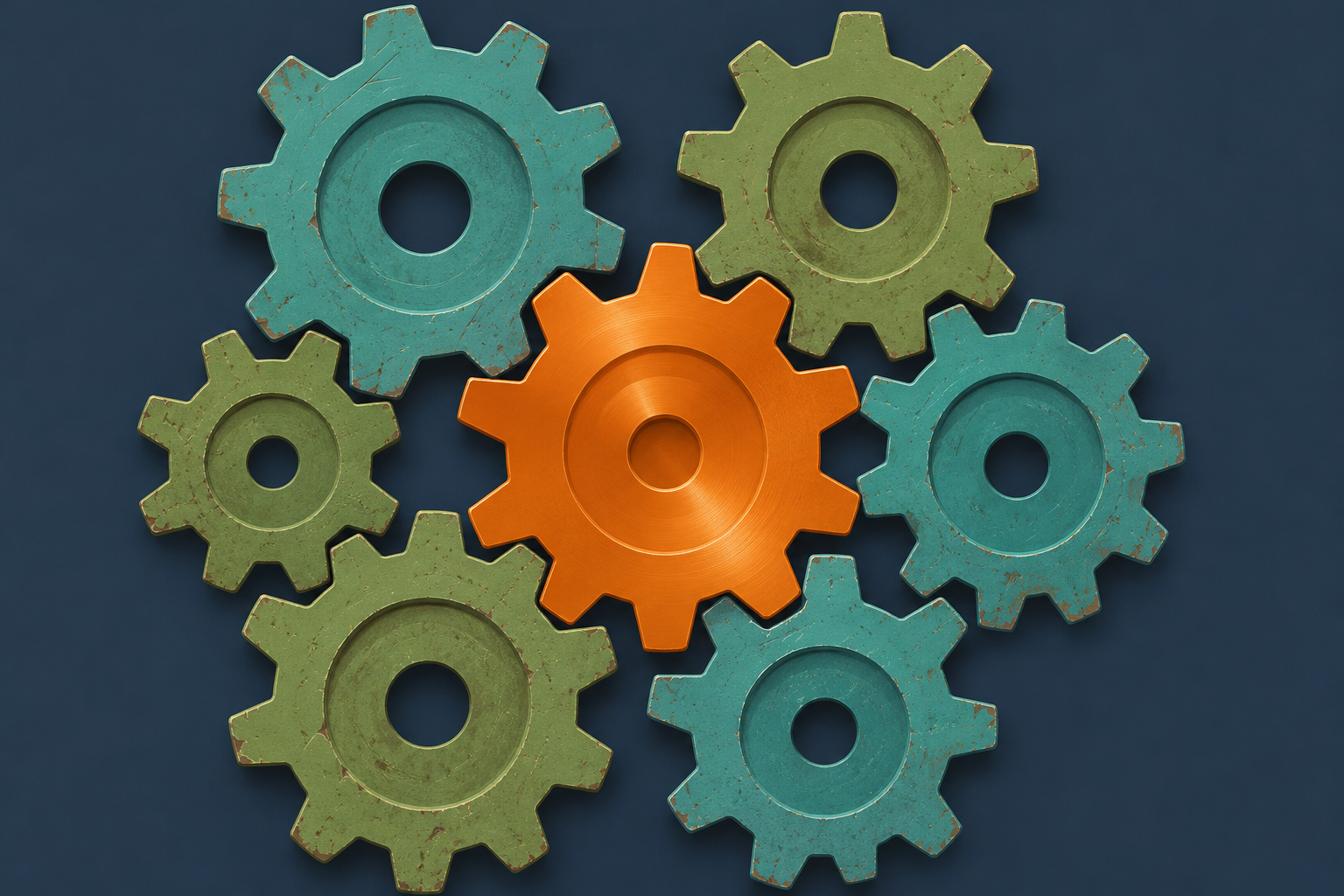
Nobody is winning in that picture, including the old way. The old way has simply had ten or twenty years to settle into how people work. It holds up at month-end, under pressure, when the deadline is tomorrow. On go-live day, the new platform is embedded: installed, configured, trained on. It isn't lived yet. Reaching for the familiar way under pressure is what anyone does when the new way hasn't had room to become natural.
Jones touched on this when she talked about honoring the past. Her team chose not to tell people that systems they'd used for decades no longer mattered. I'd take that instinct further: the old way is the standard the new one has to meet. A new way of working isn't finished until it feels as natural as the one it replaced.
In Businessolver's 2026 workplace research, 49% of employees said they'd been left to figure out AI on their own. Nobody figuring out a new tool alone is going to stop using the old way first. They run both, and hope one of them holds.
People are reading the situation accurately, too. In an April 2025 Gartner survey of nearly 1,000 business leaders, 36% said their teams were more likely to hesitate and wait to see whether a change would stick before adopting it. They've watched plenty of changes arrive with fanfare and fade, so they wait to see whether this one gets the room it needs.
Where AI belongs
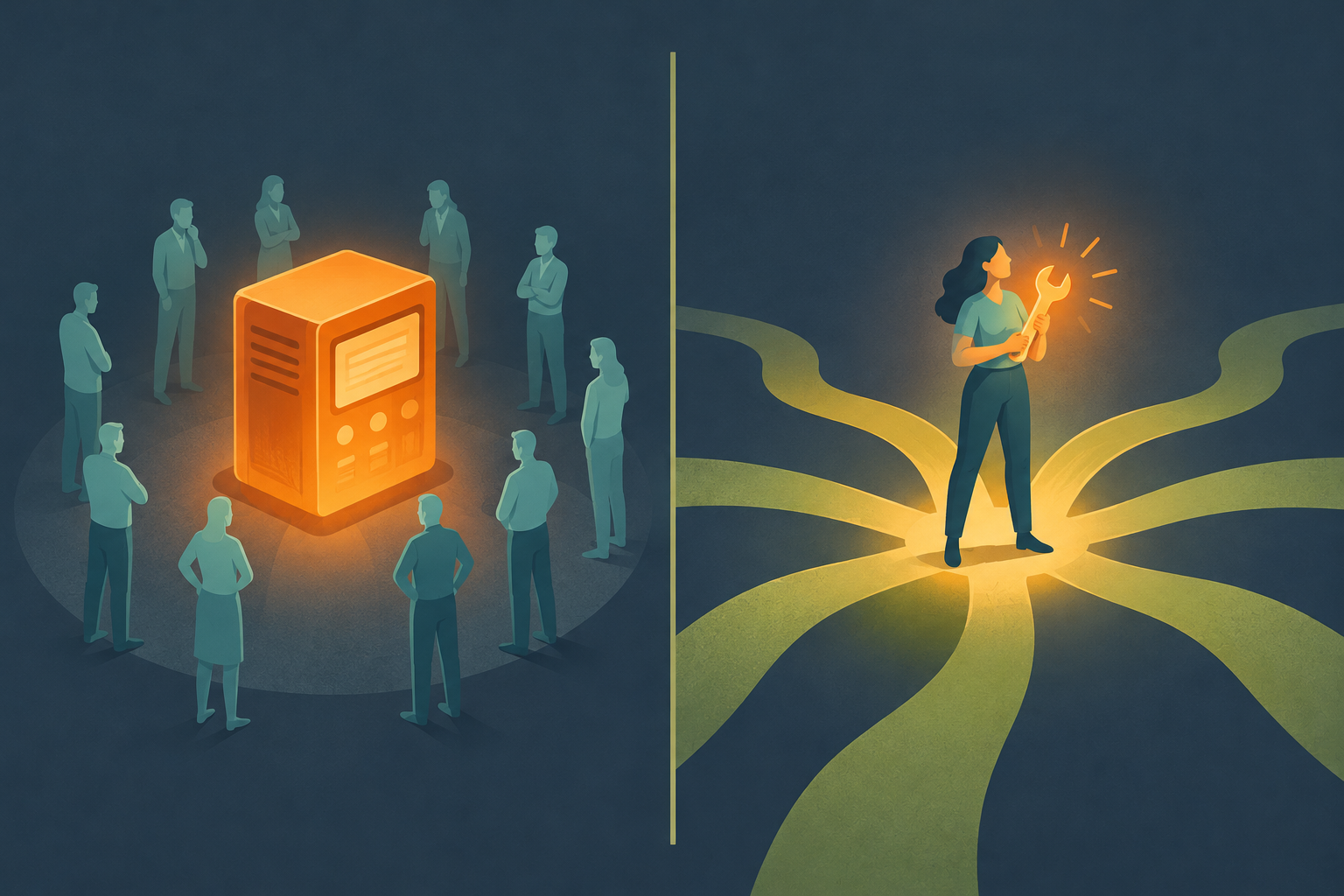
Putting the tool first is already proving expensive. Gartner predicts that by 2029, 30% of employees replaced by AI will be rehired, often at a higher cost, and found that only 19% of organizations plan their workforce in a way that accounts for how AI is changing the work. Gartner's Caitlyn McDonough put it plainly: many organizations "are making AI and workforce decisions in the wrong order." They cut the people first and find out what the work needed afterward. SHL has a name for it: AI rebounding.
Korn Ferry's Briefings magazine tells a small version of the same story. When a copywriter left the Australian marketing company Cubic Promote, CEO Charles Liu had AI take over the writing. The drafts came fast. Then someone had to edit them, fact-check them and get them ready for clients, and as Liu put it, "automating those later stages was much more complex than generating the drafts themselves." He ended up hiring a person, because the drafting changed and everything around it stayed put.
In the promo for that keynote, Jones framed the opportunity this way: most of the industry uses AI as a tool, and Cisco wants to go further and "rebuild it from the ground up with AI at the center." The vision of HR that anticipates what people need is a good one. Where AI sits in it is where I'd push back. A tool at the center is exactly how an organization ends up live but not different: everything gets rebuilt around the platform, while the people expected to work the new way stay where they were. Using AI as a tool puts it in people's hands, where it makes the work better and faster. People belong at the core. And to be fair to Jones, her own keynote line makes the case better than I can: transformation cannot move faster than trust. Trust is something people give. A platform can't.
Proof is the missing piece
The six themes are about getting a change to take hold. None of them tells a leader how to know that it has.
Jones's candor shows why that matters. Cisco is trading speed for better outcomes. Plenty of leaders would love to make that trade. Few can defend it in a budget review, because "it's slower, but it's working" is hard to prove when the only evidence on the table is adoption data: logins, completions, usage. Those numbers show a change happened. They can't show it held.
In WalkMe's research this year, 54% of workers bypassed the AI tools they'd been given and did the task by hand at least once in the past month. On a usage report, plenty of those people count as adopted.
So the questions change. Is this how people work now, at month-end, with the deadline tomorrow and nobody checking? Did the change deliver what the organization bought it to do? And did the people who made it happen come out stronger, or depleted?
The stop list nobody writes
One line in the think tank write-up stayed with me more than any other. The authors noted that the groups had plenty of recommendations for what organizations need to start doing, and far fewer about what to stop.
Every new way of working lands on people whose weeks are already full. If nothing comes off the plate, the new way competes with the old way for the same hours, and people end up doing both.
The think tank closed with a good suggestion: pick one change already underway and ask the people living it where they'd start. I'd add a second question for the same people. What did you stop doing to make room for it?
If the answer is nothing, the change is live, but not different.
That's the gap I work in at Engage3P. Change Embodiment™ tracks whether people have the capacity to absorb a change before it launches, and Return on Intention™ validates afterward whether it delivered what it promised and whether it will last. That proof is what makes a slower rollout defensible in a budget review.
Subscribe on Substack so the next piece comes straight to your inbox.
For more insights, follow Engage3P on LinkedIn.
